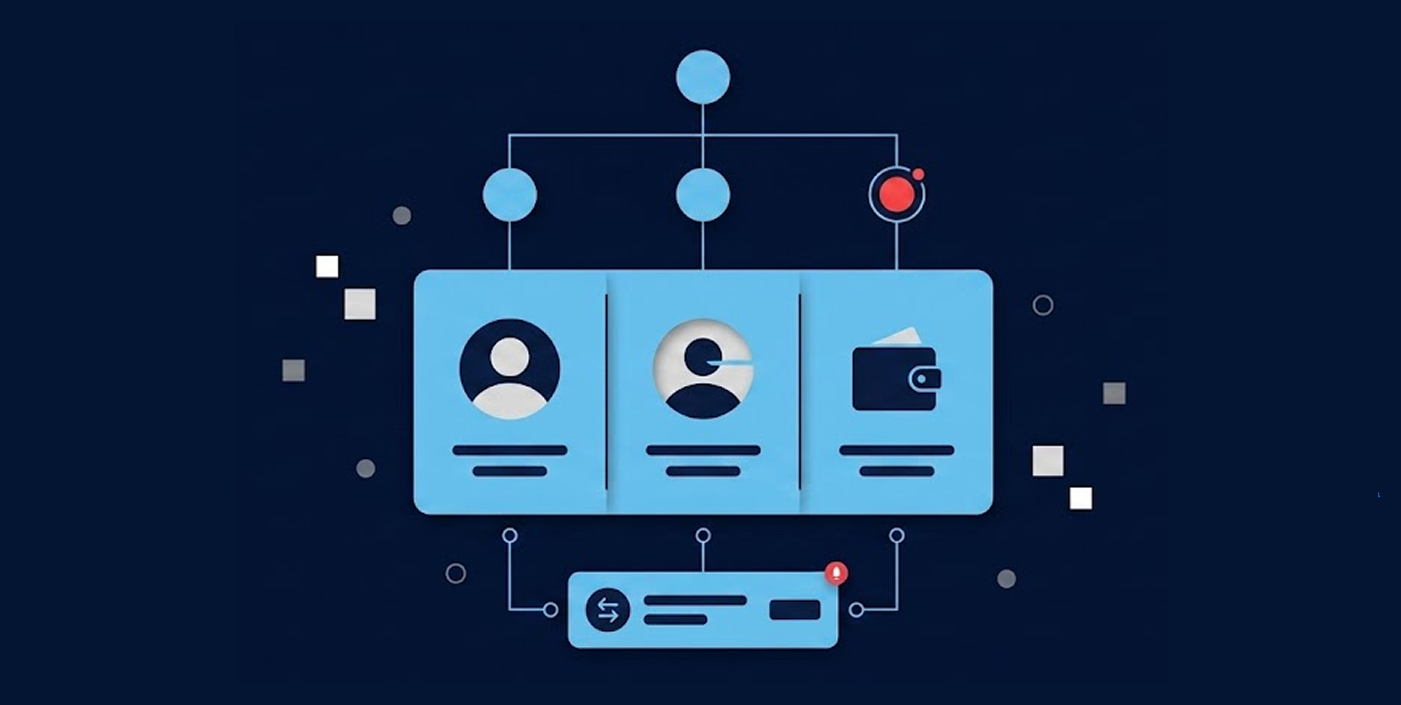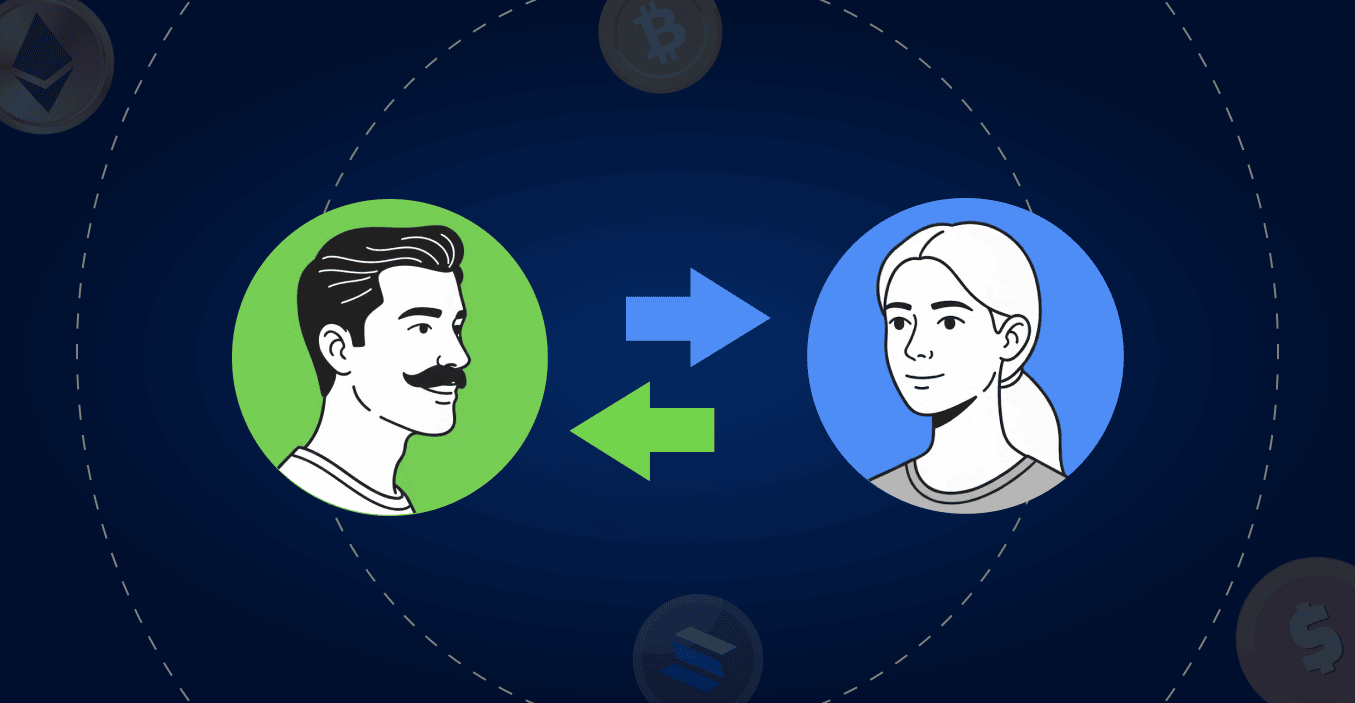

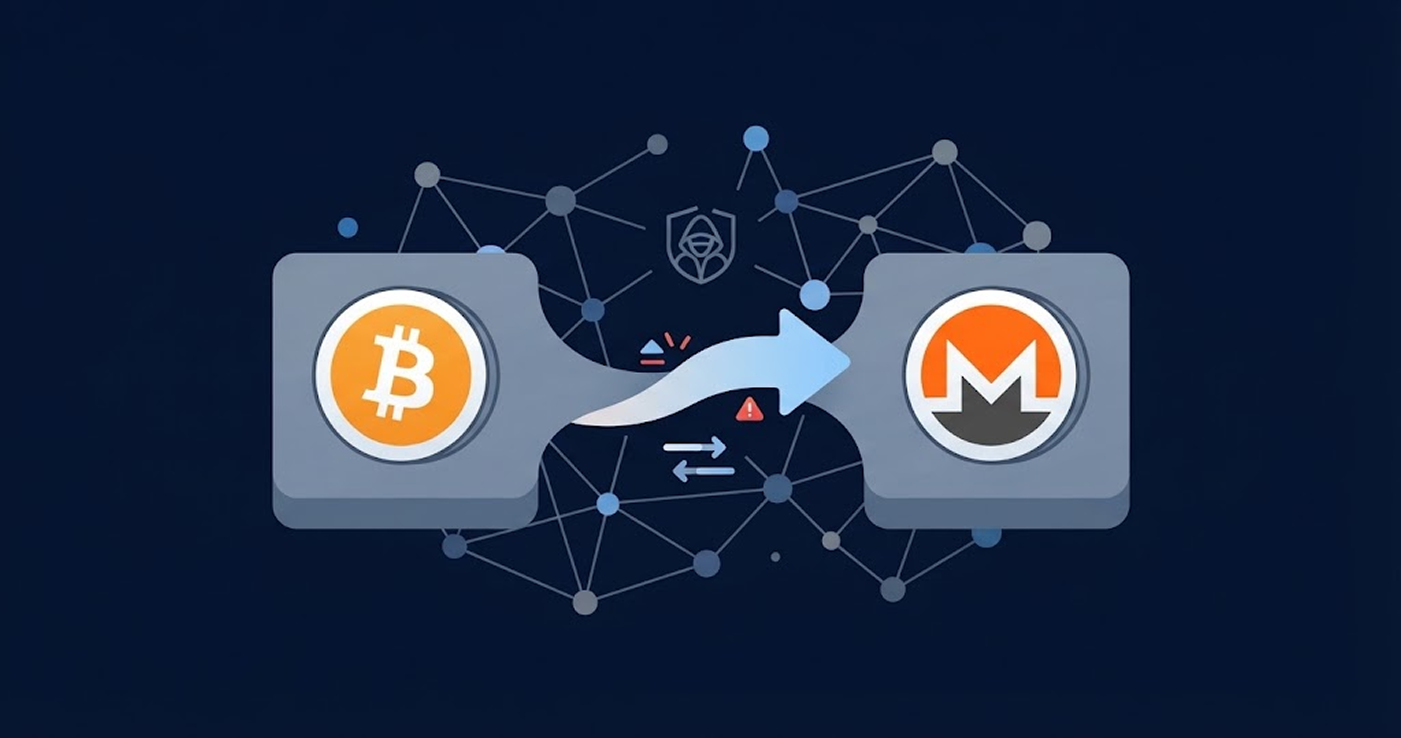
If you want to swap Bitcoin (BTC) for Monero (XMR) without submitting your ID, a non-custodial, no-KYC exchange can make the process simple. Most swaps take around 10 to 60 minutes and require no selfies, lengthy verification, or paperwork.
Privacy is a major reason people make the switch. Bitcoin transactions are recorded on a public blockchain, making it possible to trace funds between addresses. Monero, on the other hand, uses privacy-focused technology to conceal transaction details, including the sender, receiver, and amount.
However, choosing the right exchange is just as important. A platform that collects personal documents can still put your information at risk if it suffers a data breach or security incident.
This guide explains how to swap BTC for XMR without KYC, what to look for in a no-KYC exchange, and how to complete the swap while sharing as little personal information as possible.
Quick Summary
- When swapping BTC for XMR, you are essentially moving your asset from the transparent Bitcoin blockchain to the private Monero network.
- Services such as Bitania do not require any identification paperwork, accounts, or sign-up processes.
- The whole process takes from 10 to 60 minutes, and the only thing you need is the address of your Monero wallet.
- You should check the exchange rate very carefully and ensure that you know the minimum amount.
- Bitania Swap is non-custodial, which means that the platform never handles your money, you deposit, the platform makes the swap for you, and you take your money back into your Monero wallet instantly.
Why Swap Bitcoin for Monero?
It’s time to face the facts: Bitcoin is suffering from a lack of privacy. Every transaction you perform is available for public access. The trail, amounts of transactions, and wallet balances are all exposed. This is good for transparency, but not so good for privacy.
Monero, however, presents a totally different situation. The protocol involves a number of privacy-preserving technologies:
- Ring signature: the transactions are designed in such a way that making a distinction between them would be impossible.
- Stealth address: the payment would be generated with a unique, single-use address for everybody.
- RingCT (confidential transactions): the amount of money is hidden from the outside observer.
Thus, after the swap, there will be no way to connect your previous Bitcoin address to your new Monero. However, privacy is not only about technology. Habits play a significant role in the issue as well.
Individuals exchange their BTC for XMR for numerous purposes:
- To maintain the privacy of their account and expenses.
- To outsmart trackers and miners.
- For commercial matters that do not require information about clients and suppliers.
- For personal safety, so that people cannot tell them how to pressure them.
- To mix things up and separate the addresses in use.
No-KYC Exchanges: What are they?
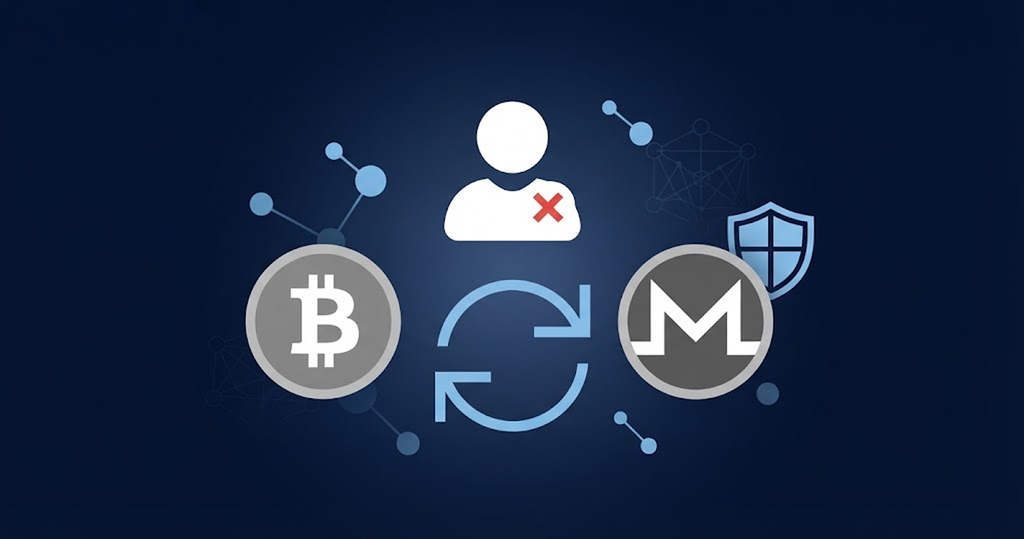
No-KYC exchanges allow you to exchange cryptocurrencies without disclosing any information about your identity. This is different from a P2P model, where users typically trade directly with one another through a platform. If you’re unfamiliar with this model, see what is a P2P crypto exchange. All that you need to do is:
- Decide which cryptocurrencies you want to exchange
- Fill in your Monero wallet address
- Transfer your Bitcoin to the deposit wallet
- Wait for XMR to be sent to your wallet
That’s all. There is no need to create an account for that.
Why is KYC important at all? The moment you give your ID to an exchange, they make a record of you with their database for all of the transactions that took place from your account.
They store it for as long as they see fit and might even decide to report it to the relevant authorities at times. Even if you take out the Monero from your account, the exchange will still know how much Monero you bought and when exactly you did that.
Using the real no-KYC system, you don’t need to keep track of anything related to your deal. However, no-KYC does not automatically mean a service is trustworthy. Users should also understand common crypto scams before sending funds, including those covered in the 10 most common P2P crypto scams (and how to avoid them). You simply send Bitcoin and receive Monera.
How to Swap BTC to XMR on Bitania
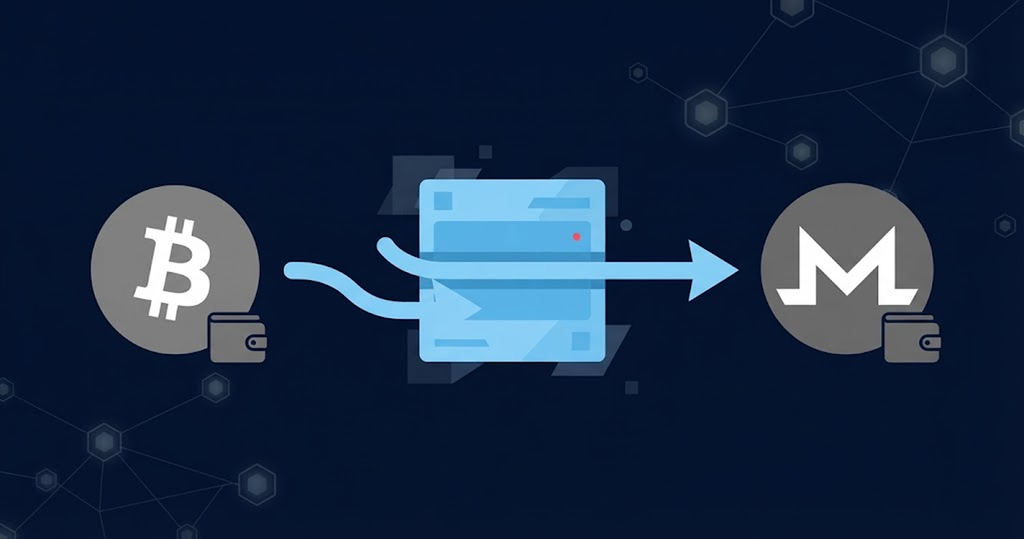
Here’s how it works, step by step:
1. Access the BTC to XMR page.
Visit Bitania.com, find the BTC/XMR pair, and select Bitcoin as input and Monero as output. You can also head to our BTC to XMR individual swap page. There you will see the live rate right away.
2. Input the amount.
Indicate how much Bitcoin you’d like to exchange. The system will instantly show you:
- How much XMR you will receive (estimated)
- The current exchange rate
- Fees of the network and service (included in the estimation)
- The minimum amount accepted (0.001 BTC, usually, but make sure to check)
Tip: Make sure to look up the rate on the CoinGecko or CoinMarketCap website just to be certain.
3. Specify the Monero address.
This is where you want your Monero to be sent; make sure to use your own wallet:
- Feather Wallet (high privacy, desktop wallet).
- Cake Wallet (easy to use, mobile).
- Monero GUI wallet (official desktop wallet)
- MyMonero (web and mobile, quite useful, but uses remote servers more, so you need to decide what suits you)
Don’t send XMR directly to the exchange deposit address, because you will lose your privacy and connect it to your identity.
4. Check and approve.
It is very vital to check the amount, rate, fee, and most importantly, your Monero address. When you feel it’s done, hit confirm.
5. Transfer your Bitcoin.
You get a deposit address that is valid for one time. Transfer the exact amount, or maybe even a little more, to cover the network fee if the wallet takes that from this amount. Take your time: the address is valid for roughly 15-30 minutes only.
6. Get your Monero.
After obtaining confirmation for the Bitcoin, you should soon see your XMR in the wallet. The timing is as follows:
- Bitcoin confirmations – 10-60 minutes (depends on the network capacity)
- Swap – 1-5 minutes
- Transfer of Monero – after around 20 minutes (Monero waits for 10 confirmations).
Be attentive and save the swap ID in case of any issues or if you need a refund.
BTC to XMR Exchange Rates
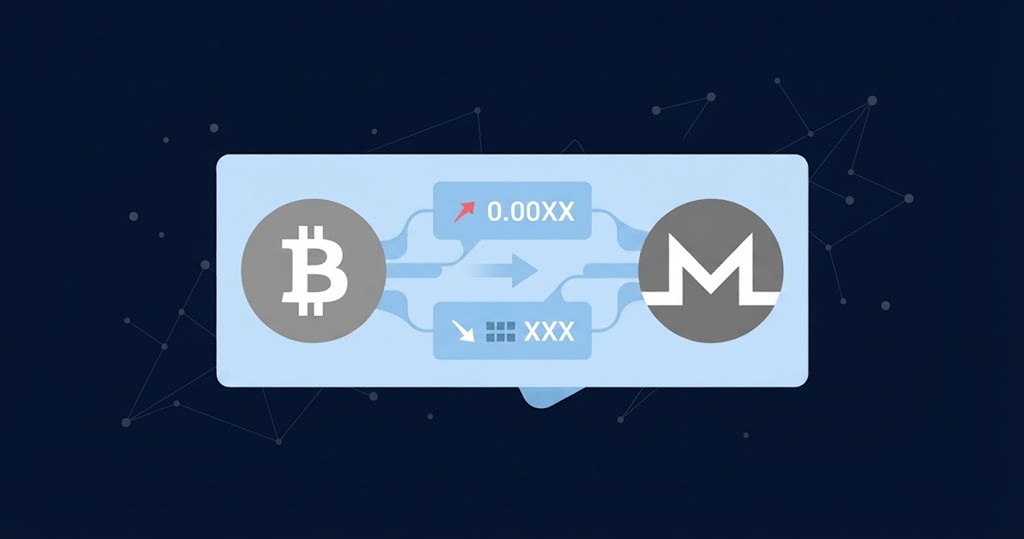
Swap rates are volatile. Here is a list of factors that impact them:
- Market price: The current trading rate for BTC and XMR on major exchanges
- Liquidity: If the demand is higher, the market will yield better prices
- Swap size: A huge swap might incur a “slippage” effect
- Network fees: The fees incurred on Bitcoin and Monero can be included in the swap price
- Service fee: Usually, Bitania Swap service fees range from 0.5% to 1%
Would you like to get a better swapping rate?
- Compare with other services
- Make a swap when the networks are comparatively less busy to avoid higher fees
- Aim for a bigger amount as fixed fees become less significant
- Check the rate before sending
Before initiating the transaction, the services show an estimated output of what a user might get.
Is Swapping BTC to XMR Legal?
Overall, the answer is a positive one. Most of the countries in the world still permit the ownership and use of Bitcoin and Monero. As of the middle of 2026, there are no countries that have officially banned Monero. What they did ban, however, are online platforms, but individuals are free to make their own transactions.
Taxes are something that must also be remembered. For instance, even though Monero is a private coin in countries that tax BTC-to-XMR exchanges, taxes must also be paid on the profits from those exchanges. Hence, seeking advice from a tax professional is a good idea if you have any doubts.
Changes are always happening in the world of regulations. Countries like Japan or South Korea are known to target privacy coins, for instance. In early 2024, Binance removed this coin from its operations, while Kraken made this decision by the end of that same year.
The biggest event is to happen in July of 2027, when newly developed regulations will make it impossible for exchanges to work with Monero, while it is still possible to keep and manage that coin by a person himself or herself. Making swaps without KYC is not illegal, but it is essential to consider your location.
Monero is a tool for privacy but not for committing illegal acts. The majority of users simply want to have financial privacy, which is perfectly normal. But do not use it for money laundering or swapping coins that you know are stolen.
Typical Mistakes When Swapping BTC with XMR
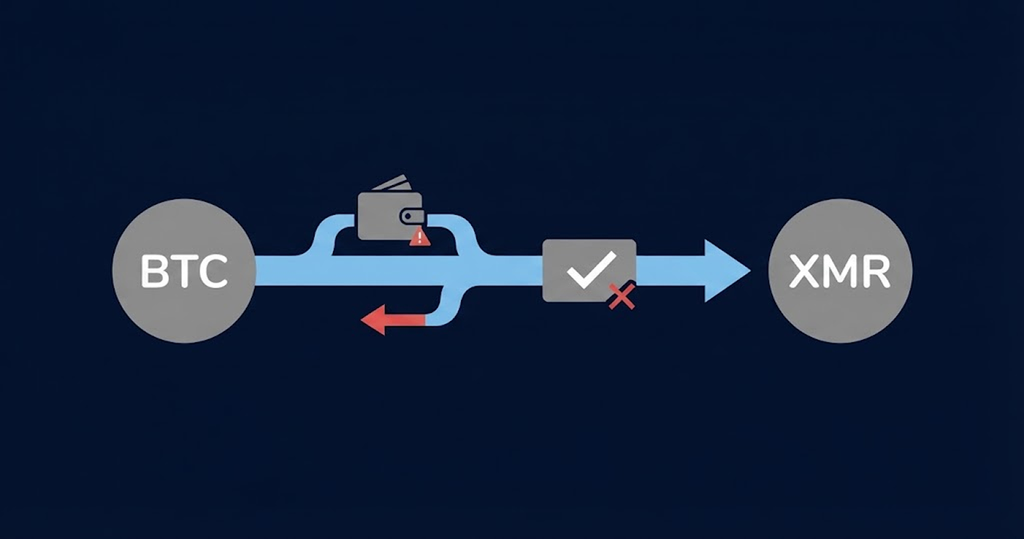
Avoid making the following mistakes:
- Send XMR directly to the exchange wallet. Use only your own wallet in order not to lose your anonymity.
- Enter the wrong amount of XMR. Little money will result in the failure of the swap, too much money will cause delays.
- Do not check the rates.
- Ignore network conditions; there may be “busy” days for BTC where swaps take longer than expected.
- Lose your swap identifier.
BTC to XMR vs Other Privacy Tools
Is Monero better than mixing or CoinJoin? Here’s the summary:
- Bitcoin mix services: it’s fine to use BTC, but a lot of the mixing services are bogus, and even legitimate ones can be shunned by the exchanges or traced by investigators.
- CoinJoin: works fair for some privacy on Bitcoin but leaves a reputation behind. It’s not foolproof.
- Switch to Monero: the privacy is already integrated. Coins are ‘clean’ (no tracking). The downside is that you now use XMR instead of BTC and will pay a transfer fee again to switch back.
In the end, many privacy-oriented people accept using Monero’s technology instead of mixing services because it’s integrated in the protocol and doesn’t depend on the number of participants.
Stay Safe Privacy is a Habit
To ensure proper privacy, here are some extremely viable methods you must follow:
- Utilize Tor or a reputable VPN so there won’t be a logical connection between the target website and your identity.
- Generate new Monero addresses for every swap; stop using the same address multiple times.
- Verify web links scrupulously and only save those which are trustworthy; there are many fakes.
- Never reveal your swaps to anyone. Providing swap data on forums or social networks is inappropriate.
- Allow your new Monero to cool down. Wait for a while before spending your coins.
- Decline trying anything new right from the start; take small and gradual steps.
The Future of No-KYC Swaps
The requirement for private swapping is growing because of the increasing regulations imposed on all centralized exchanges and hacking incidents occurred.
The non-custodial swapping services have emerged as the most reliable way to buy Monero and the biggest centralized exchanges have removed this currency from circulation. However, be careful as many reviews of different services are sponsored.
If you really want to keep your ownership of assets, this BTC to XMR route is probably the safest and easiest one to take, which allows you to transfer cryptocurrency without revealing your wallet history.
Why Use Bitania Swap
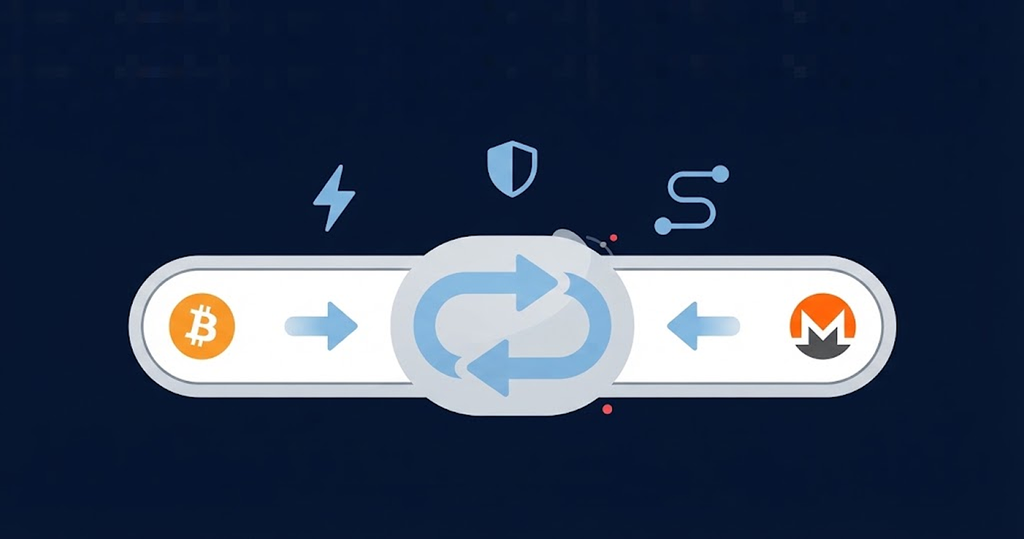
Bitania Swap provides that no KYC verification is required and there is no registration process. Your funds are not held by the platform at any time. The platform offers attractive rates as they analyze data from several sources at the same time.
What’s more! Numerous coins are available for using this service. It supports high speed of work, mostly less than 30 minutes and human support is also provided in case of problems.
Indeed the process of exchanging Bitcoin with Monero without KYC verification is so uncomplicated. It is important to select a reliable service provider that does not hold your coins. It is best to use your own wallet. Just make sure to check the latest rates, perform transfers and always save the swap ID.
Take care, keep in mind tax requirements and legal aspects in your area, and remember that privacy tools are only effective when you know how to use them. If you have any questions, please don’t hesitate to leave a comment below and someone will be happy to assist you. Feel free to share this guide with somebody interested in privacy.
FAQs
Usually, it takes from 15 to 60 minutes maximum due to the amount of time required for Bitcoin confirmations, and their confirmation time is determined by the congestion on the network.
Typically, no-KYC services require a minimum of 0.001 to 0.005 BTC. Bitania offers all required information on our swapping page before you start.
It is true that Bitcoin is always sent in a public manner, while Monero provides anonymity to its users. However, make sure not to make any mistake otherwise you lose your privacy.
Non-custodial services refund you almost always, either your BTC or the XMR that you were expecting. Remember your swap ID so that you can reach out for help.
Yes! Without a wallet, you can’t have Monero. Be sure to have a self-custody wallet such as Cake or Monero GUI before swapping.
Bitania is non-custodial and has no KYC or accounts, so we do not hold your coins (never). Regardless of this, it is better to keep safety measures in mind. You may want to make a test swap, check for the real website, and never risk more money than what you are ready to lose.
Yes, Bitania allows you to go backwards as well. The same no-KYC conditions apply.
Generally, about 0.5% to 1%. There are no hidden costs.