
A P2P (peer-to-peer) crypto exchange allows individuals to buy and sell cryptocurrencies directly with one another, without relying on centralized exchanges or financial intermediaries.
Platforms like Bitania are at the forefront of this model, offering a secure, no-KYC marketplace where you can trade directly with peers on your own terms.
Instead of placing orders through a traditional platform, buyers and sellers connect in a digital marketplace where they negotiate prices, choose preferred payment methods, and complete transactions on their own terms.
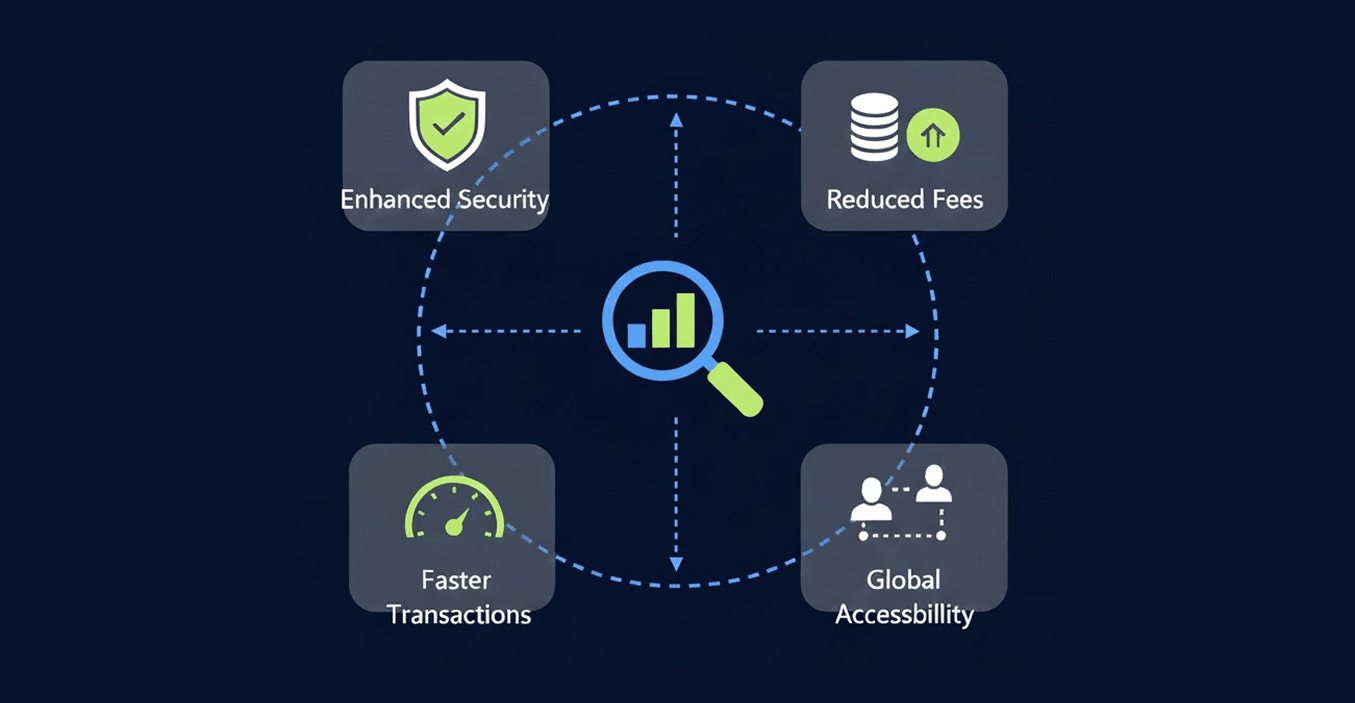
This trading model offers several advantages, including lower fees, greater privacy, and more flexibility compared to centralized exchanges. Many P2P platforms also support local payment options, making crypto trading more accessible in regions with limited banking services.
As cryptocurrency adoption continues to grow worldwide, P2P crypto exchanges are gaining popularity as a practical and user-controlled way to trade digital assets securely and efficiently.
How to Access P2P Trading Safely and Securely
Safety should always come first in P2P Trading, which is why we have provided this list of tips to help keep yourself safe while doing so. For a comprehensive breakdown, be sure to read our detailed guide on P2P trading safety tips.
Here’s our list of best practices for securing P2P Transactions:
- Always review the reputation score for anyone you are considering trading with. This includes checking their past transaction history and reviews made by others. A high rating and many positive reviews typically mean that the person is trustworthy.
- Use the P2P platform’s escrow service for all of your transactions. Never agree to remove escrow as a safeguard, regardless of any offers from others for better rates. The Escrow Service is the safest method to protect against losing money because you entered into a fraudulent agreement.
- Always set up Two-Factor Authentication for your P2P account. This will greatly improve your account protection as it requires an additional verification step in order to access your account.
- Only use the payment methods allowed on the P2P platform. Don’t fall for the temptation of shortcuts or unusual payment solicitations – they could be scams. Familiarize yourself with the most common P2P crypto scams to recognize and avoid them. Keep thorough records of your transactions, including screenshots of confirmations of payments and chats that took place during the transaction. These will be very helpful to you if there is ever a dispute related to your transaction.
- When starting out with P2P Trading, it is a good idea to only start with small amounts of money. As you learn about how P2P works, you can increase your trading amounts as your confidence in the system grows.
- Most importantly, always use the provided communication systems on your preferred platform. Using any external options may compromise your personal credentials and leave you prone to fraud.
Types of Peer-to-Peer Network Systems
Peer-to-Peer networks can take many different shapes and have various features that impact how they operate.
Network systems that utilize structured P2P networks utilize distributed hashing to create a hierarchy of resource organization; by utilizing this structured format, peer-to-peer cryptocurrency exchange platforms can provide a higher degree of utility and security.
Structured networks allow for streamlined resource searches; therefore, when you search for a peer-to-peer trade, it allows for faster match-ups between participants.
Unstructured networks allow for more flexibility, although unstructured networks may lack the structured hierarchy of the previously mentioned structured peer-to-peer networks, they can still offer utility for some forms of peer-to-peer activity.
On the other hand, unstructured networks likely do not offer the level of strength necessary for secure cryptocurrency trading and are therefore less common on peer-to-peer exchange platforms. Hybrid networks provide the best of both worlds by incorporating features from both structured and unstructured peer-to-peer network systems.
A hybrid network provides the perfect blend of security, flexibility, and efficiency for P2P cryptocurrency exchanges to build more secure and user-friendly trading environments in the digital asset space.
The Science Behind P2P Trading
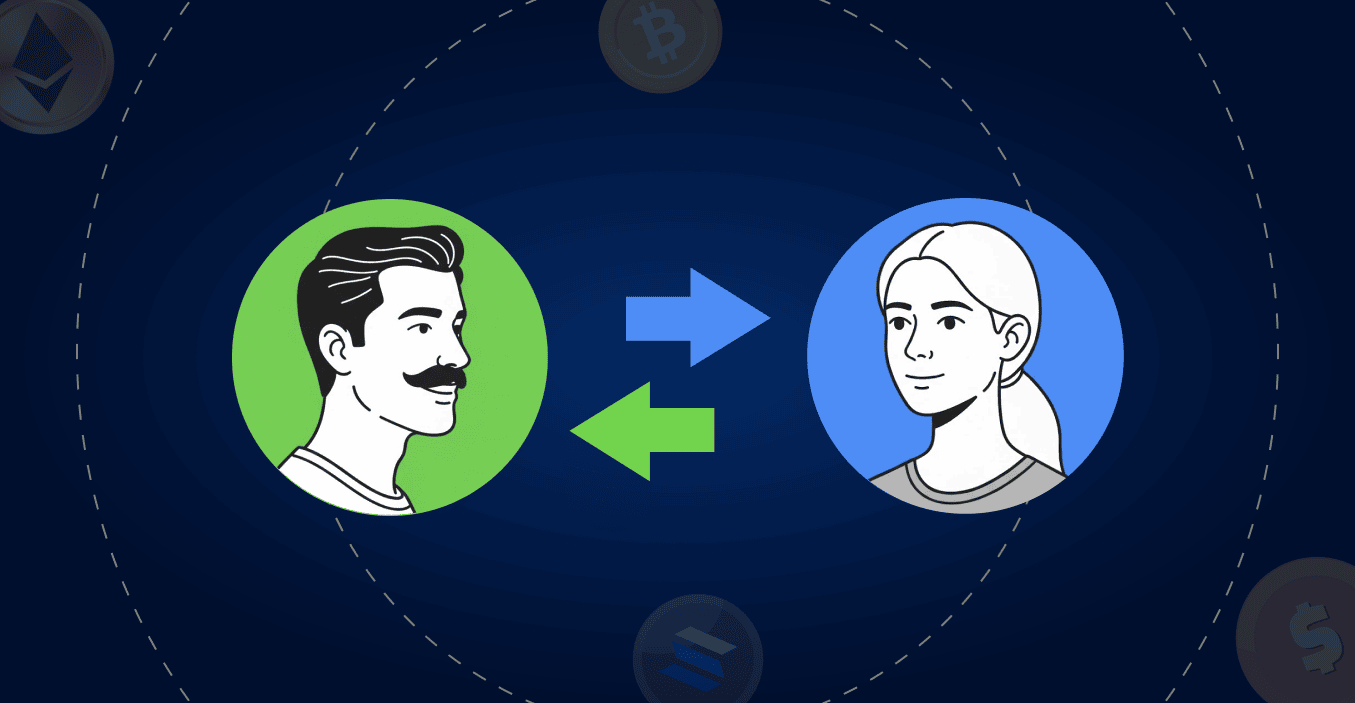
How exactly is entailed in the Peer-to-Peer trading of digital currencies? We’ll show you.
While using a P2P Trading Exchange platform, once you sign up as a new user, you will create your trading offer(s). You define the amount of cryptocurrency you wish to purchase or sell, the price you would like to offer for that amount and the terms that will be acceptable to you.
Other users browsing through the various trading offers will connect with you once they see one that fits their needs.
Here’s one of the best parts: payment flexibility. You’re not stuck with just one or two boring options.
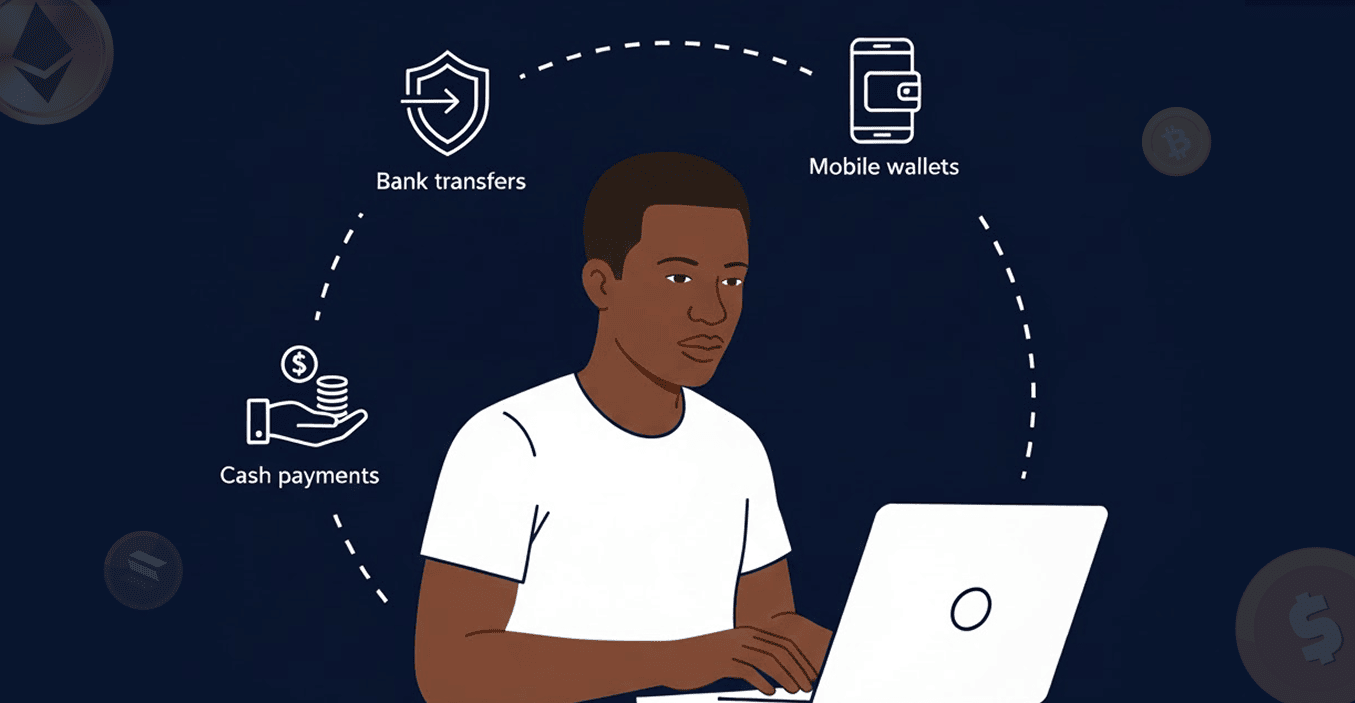
- Bank transfers? Sure.
- Cash payments? Why not?
- Mobile wallets? Absolutely.
Whatever works for both of you. With such flexibility, you can operate without banking limitations.
Now, you might be thinking, “Wait, if I’m trading directly with strangers, how do I know I won’t get scammed?”
That’s where escrow services come in. It’s a technology that locks the digital asset of a “seller” until payment from the “buyer” is confirmed; at the end, both sides are satisfied.
THIS protects everyone.
The whole system is blockchain-powered, thus it validates all transactions and maintains secure, zero-compromised records. So your trades are both fast and secure, no matter where in the world you’re trading from.
Benefits of Decentralized Trading
Decentralized trading through P2P crypto exchanges offers some pretty solid advantages that appeal to anyone who wants more control and better value.
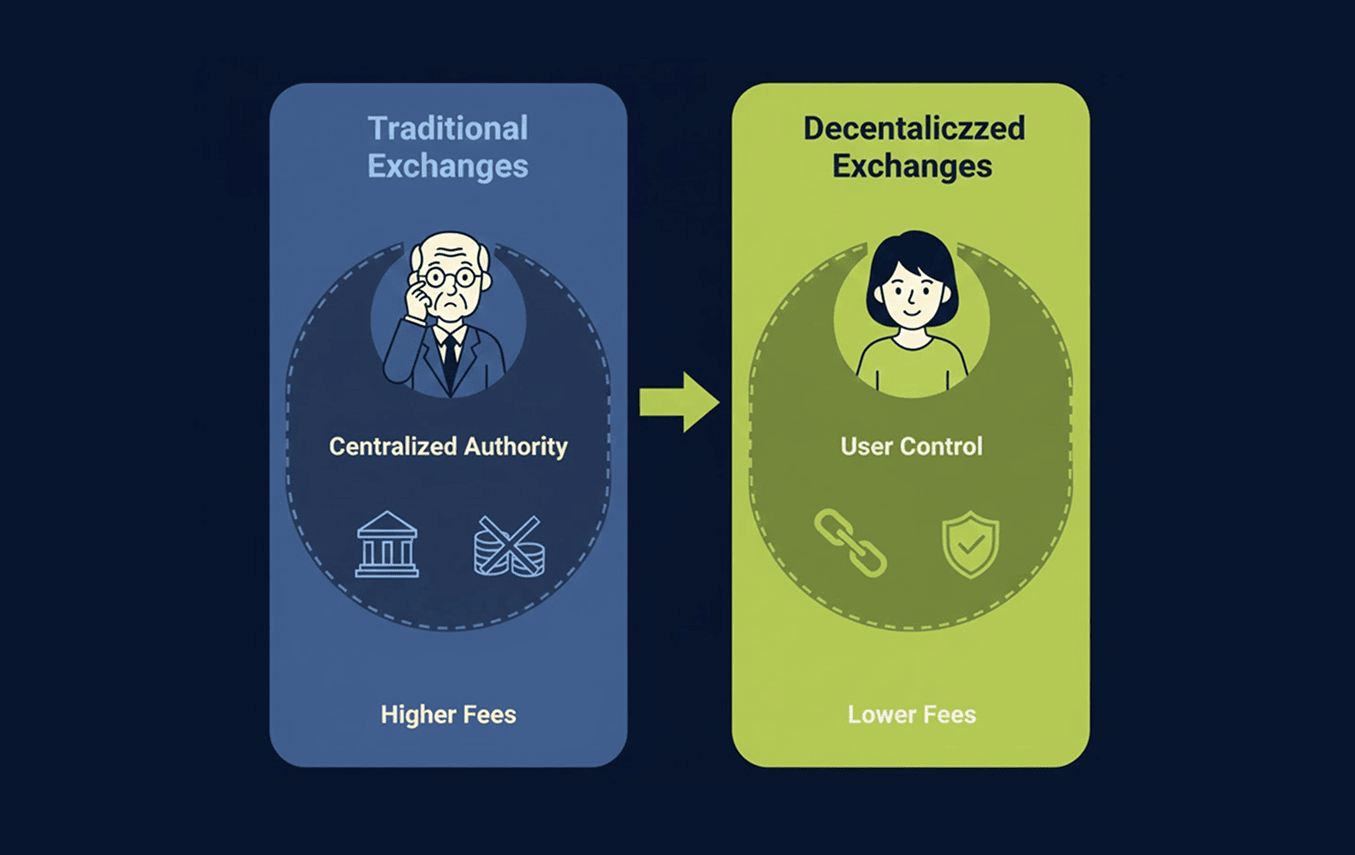
Lower trading fees are probably the biggest draw. Since P2P platforms don’t have a central authority managing every single trade, they operate with way lower overhead. And guess what? Those savings get passed directly to you.
But it’s not just about saving money. P2P crypto exchanges give you a secure and transparent trading environment. You’re dealing directly with your trading partner, which actually reduces the risk of scams that you might run into with other methods.
Plus, you get real autonomy, and you can create personalized trading offers that fit your exact needs. Try doing that on a traditional centralized exchange. The whole rise of decentralized finance (DeFi) has also pushed P2P trading into the spotlight.
These platforms basically embody what DeFi is all about: peer-to-peer transactions without intermediaries getting in the way. You manage your crypto assets on your terms, which is honestly what cryptocurrency was designed for in the first place.
Comparison to Traditional Exchanges
There are obvious differences between P2P and traditional exchanges. One of them is fees. Traditional exchanges often hit you with trading fees that can seriously eat into your profits. Many P2P crypto exchanges charge minimal fees or sometimes none at all. If you want to maximize your returns, that’s a pretty big deal.
Security and privacy work differently, too. Common public exchanges require your personal info to comply with applicable regulations; as such, some users may view these restrictions as excessive if they value their digital privacy.
P2P cryptocurrency exchanges often require considerably less personal information compared to traditional exchanges while offering all of the legal protections afforded to such exchanges.
Regarding user experience, P2P platforms are different from most traditional exchanges. These platforms permit users to negotiate all aspects of the trade directly with one another. Because of these direct negotiations, you will have a wider variety of exchange rates and payment options available.
Security Protocol
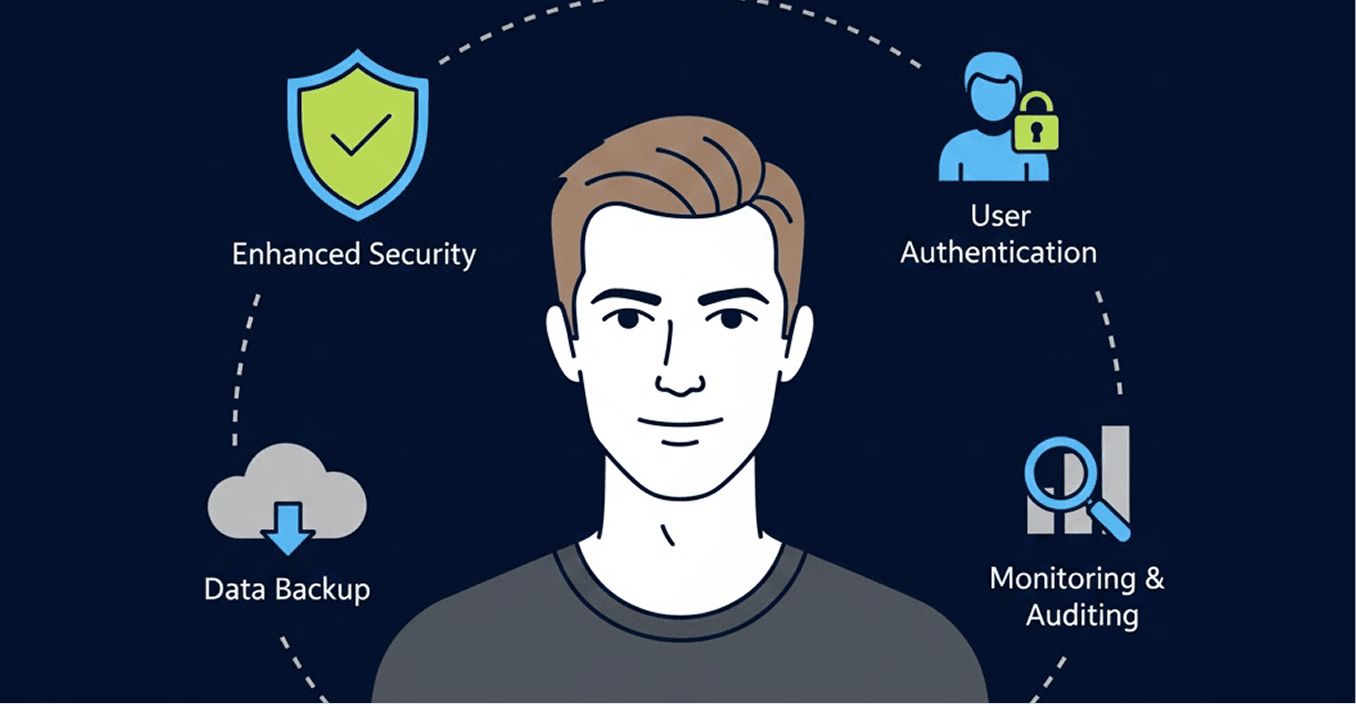
Another important aspect of P2P exchanges that sets them apart is that they provide the user with a greater degree of security. Users of reputable P2P exchanges can expect to utilize two-factor authentication (2FA) as a standard feature for protecting the security of their accounts against unauthorized access.
The two-factor authentication process involves having a device other than your computer or mobile device verify your identity before permitting you to access the account. Escrow services are the real backbone of secure P2P trading. When you start a trade, the platform locks up the cryptocurrency in escrow until both parties confirm everything’s done.
This protects you from fraud and ensures digital assets only move when everyone has done what they agreed to do.
P2P platforms are beginning to incorporate smart contracts at a growing rate. Compromise between the seller and buyer is eliminated; no one needs to be involved to complete an agreement. Since everything is done via a computer program (the code), these self-executing agreements automatically enforce their terms, allowing a transaction to occur when the parameters are met.
Dispute Resolution Systems provide both parties with a backup plan, should something go wrong in the execution of the smart contract. Most quality platforms will have teams in place to evaluate evidence and arrive at an equitable conclusion when a disagreement arises.
In addition, some platforms are also beginning to implement a Distributed Hash Table (DHT) as a way of increasing security and providing more transparency in their networks. This ensures that every trade is conducted through validated and secure processes.
Payment Methods
Here’s where P2P crypto exchanges really shine in payment flexibility. Unlike traditional exchanges that might box you into one or two options, P2P platforms support a ton of different payment methods.
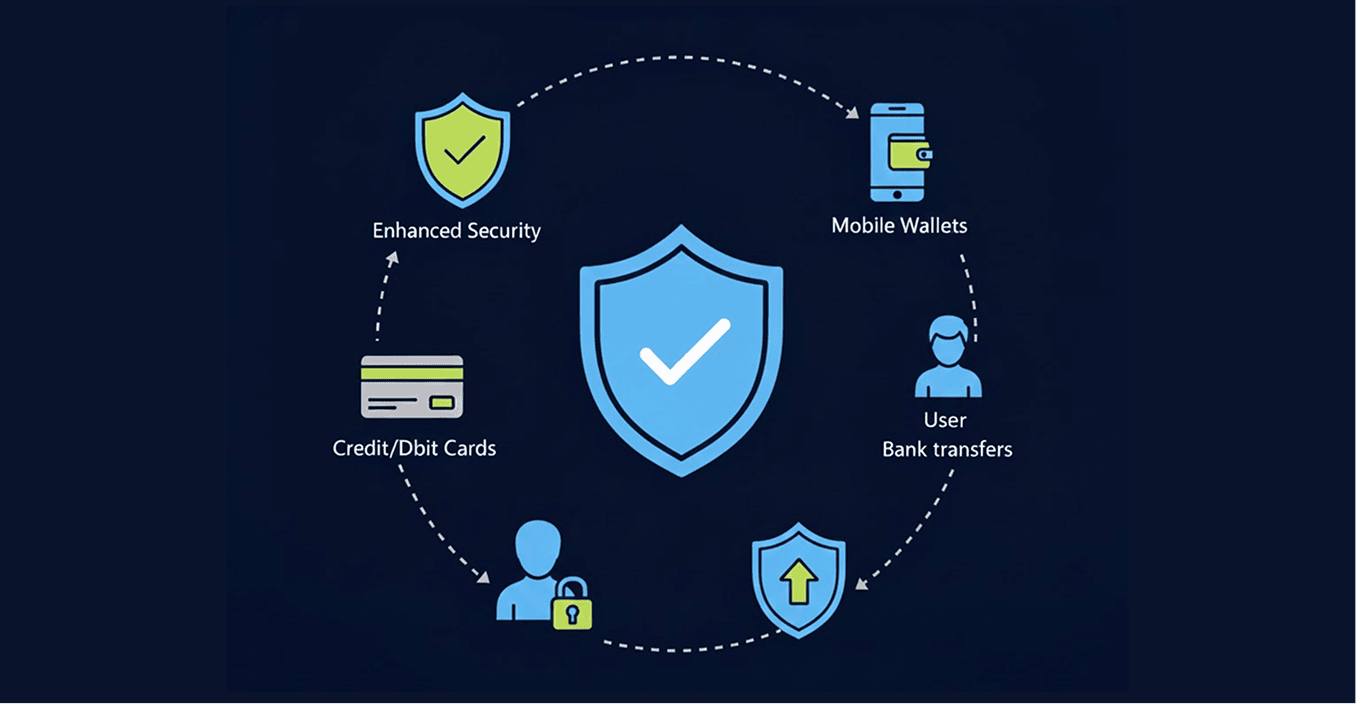
Bank transfers are popular and widely accepted. Countries without banking access can use cash for payment through P2P crypto exchanges. All types of digital payment programs, such as mobile wallets, also exist as a means of making your transactions via P2P crypto exchanges. Choosing the right method for your needs is crucial; our detailed comparison of bank transfer vs. e-wallet for P2P trading breaks down the pros, cons, and security considerations of each.
Most platforms provide users with the ability to use multiple fiat currencies to purchase cryptocurrency, allowing users from around the globe to use them. It means that if you live in Europe, Asia, Africa, or North America, you can find ways to pay for cryptocurrency using a form of payment that works within your local currency.
Through escrow services, P2P crypto exchanges ensure that users can make payments on a secure and transparent level. Fraud is less likely to occur when payments are secure. Since these platforms accommodate a wide variety of payment methods, users from any financial institution can take advantage of trading in cryptocurrency on P2P platforms.
Regulatory Compliance
As previously mentioned, while P2P crypto exchange businesses are decentralized and as such, they need to adhere to regulations to maintain their legitimacy and reputation. The two most common regulation points are AML and KYC. Regulators use these two areas to help ensure the authenticity of users engaging in trades through P2P exchanges.
Two-factor authentication and escrow services protect you while making sure the platform stays compliant with legal requirements. But here’s the thing—regulatory compliance isn’t just about following rules. It protects you as a user.
It creates a secure trading environment that encourages more people to adopt P2P crypto trading in the global market. When a platform takes compliance seriously, you can trade with way more confidence.
The Role of P2P Exchanges in Crypto Trading
P2P exchanges play a significant role in shaping the entire market of virtual assets.
How?
Thanks to the development of new, low-cost, innovative services. What’s more? The provision of a reliable medium to purchase and sell digital assets.
Blockchain technology allows users to buy and sell digital currencies without the need for third parties, allowing for the development of a true marketplace without any fees associated with it.
The ability for consumers to connect with each other provides a marketplace that operates more efficiently than traditional online exchanges. By using blockchain and smart contracts, every transaction is verified and secured, giving traders peace of mind and assurance that they’ve got 100% control over their transactions.
Given the growth of P2P platforms, lower costs, and maximum control, many traders will continue to troop in; changing the modus operandi of crypto exchanges in the long run.
Key Features of a P2P Exchange
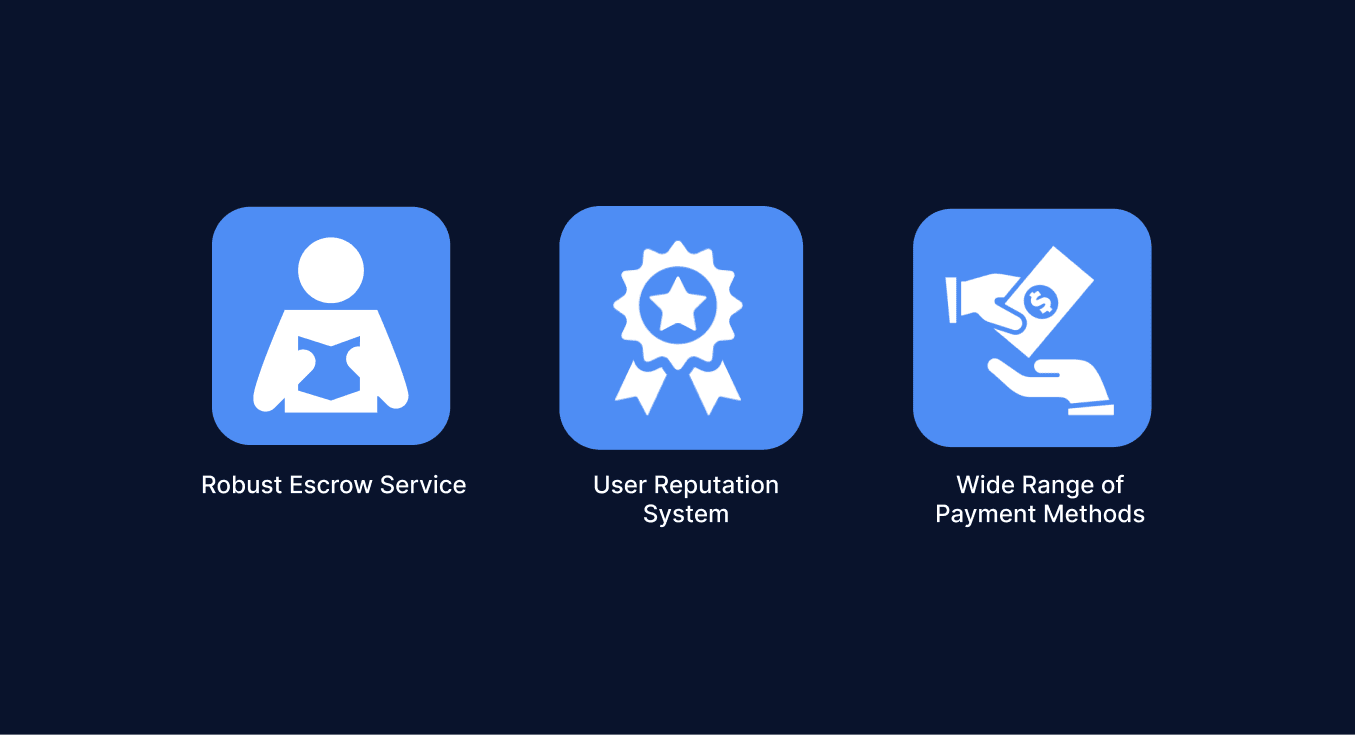
If you are looking for an ideal P2P exchange to trade your virtual assets, here are the A-Must-Have features to look out for.
Robust Escrow Service
Establishing a solid escrow system is a necessity. The platform should securely hold the money until both parties have fulfilled their responsibilities toward one another. This type of arrangement protects you against fraud and increases trust between two people who are meeting one another for the very first time.
User Reputation System
Always check ratings, user reviews, as well as trading history of users on your preferred platform. That way, you can dodge the pitfalls that come with unreliable platforms. This is important as it protects everyone within the marketplace.
Wide Range of Payment Methods
Flexibility is important. The best Peer-to-Peer (P2P) platforms support diverse fiat currencies as well as numerous ways to pay, such as bank transfers, mobile payments, and other local payment methods. This allows users from a variety of global regions to utilize the platform more effectively, therefore allowing for quicker connections with potential trading partners!
Low or No Fees
Many people choose P2P trading instead of using traditional exchanges primarily to reduce trading-related transaction fees. Therefore, the existence of a P2P exchange that offers reasonably low (or zero) transaction fees makes the utilization of peer-to-peer transactions a much more appealing and economical choice.
However, understand that even if you don’t pay a transaction fee, you’d pay for network fees when moving digital currencies from one location to another through on-chain methods.
Customer Support
The best platforms will offer you extensive support for any issues that may arise throughout the course of your P2P crypto trading. You’ll want to find platforms that have a strong KYC compliance protocol, including how they communicate and provide customer service through secure channels.
When using a P2P platform to conduct a trade, a strong dispute resolution system can help alleviate any anxiety you may have regarding transactions made on the platform.
User-Friendly Interface
The most user-friendly trading interfaces are both easy to navigate and structured in a way that makes it easy for you to find offers, filter trades, and pay for transactions without having to search through numerous menus.
This is particularly important for both new users who are using this guide as a beginner’s reference and users who have prior experience as a trader with different transactions occurring at once.
Is Peer-to-Peer (P2P) Trading Legal?
In certain jurisdictions, yes. Yet, where you live determines whether P2P trading is legal or not. For instance, in the United States, P2P platforms fall under money transmitting businesses, so they must comply with AML and KYC regulations.
Thus, user verification or knowing your customer is paramount. In other regions, countries are taking a mixed approach to the legality of P2P trading. Some countries have explicit regulations that support this form of trading, while in others, the regulatory authorities are still in the process of creating rules for P2P trading.
In conclusion, there is no universal ban on peer-to-peer (P2P) crypto trading. However, the legal status and enforceability of these transactions (P2P crypto trading) are very different depending on where you live.
You should find out what your country thinks about the P2P crypto trade before you begin trading. If you have any uncertainties, consult a qualified attorney who is familiar with your country’s crypto regulation laws.
Future Trends in P2P Crypto Trading
The outlook for P2P crypto trading appears very encouraging. Decentralized Identity (DID) systems are in sight, providing a means of verification for users without giving out too much of their private credentials. DID systems enable users to identify themselves, proving who they are, while maintaining a high degree of anonymity.
Smart Contract Escrow services are becoming increasingly popular. Through the use of smart contracts that are built on the Blockchain, P2P transactions can occur without an intermediary holding the funds, and the terms of the agreement will be automatically enforced by the code itself.
Mobile first is becoming the standard business model for the industry. With more users accessing cryptocurrencies via mobile devices compared to computer-based applications, P2P platforms are developing their mobile app interfaces specifically for mobile users, making trading easier for users and providing better access to more of the world’s population.
Integrating with DeFi opens up yet another area of growth for P2P platforms. Future P2P trading platforms could offer DeFi products and services such as yield farming, lending products, and other features right in their interfaces.
The intersection of P2P trading and Decentralized Finance (DeFi) will create numerous opportunities for cryptocurrency users.
Common Mistakes to Dodge
Keep these in mind! Do not rush into any trades without first checking the user’s rating and feedback. A trade that sounds too good to be true is usually just that, especially when the rating is low or there is not enough historical data to support it.
- Never move your conversations away from the platform. Be it WhatsApp, Telegram, or email, don’t move.
- Stick with payment options you are familiar with. Don’t try anything new unless you’re conversant with it.
- Always follow the guidelines of your selected platform. It’s how one can reduce risks and improve safety.
- Again, make sure you release digital assets ONLY when you’ve received payment. Well, you should have an escrow in place.
If you release crypto from escrow without confirming payment has been received, you will not receive it back if the payment does not appear.
Trade P2P Securely with NordVPN
Why trade crypto with a VPN?
NordVPN is our preferred VPN option for virtual currency traders. It protects the encryption of your internet connection, concealing both your Internet Protocol (IP) address and your Internet activity from potential threats.
In addition, using NordVPN adds an additional layer of security when you are dealing with financial transactions. By connecting to NordVPN, your internet connection will be routed through their secure servers.
It will thus protect your cryptocurrency trading from your Internet Service Provider, would-be hackers who access your connection via public Wi-Fi, and other persons who could track your activity. Also, if you’re travelling or residing in a region with restrictions on certain P2P exchanges, using a VPN saves the day.
With NordVPN, there’s no logging, you get strong encryption, as well as servers perfect for speedy activities. All of this is critical for making time-sensitive crypto trades. Using NordVPN is an important way to protect yourself when you trade on a peer-to-peer basis (P2P).
Wrapping Up
Knowing what a P2P Crypto Exchange means gives you the ability to trade your cryptocurrencies in a manner that gives you the most control over your transactions. With no central authority, you can trade directly from one person to another. As such, P2P crypto exchanges represent a safe, effective, and customizable way to trade your digital currency versus traditional exchange methods.
Thanks to Escrow services, Smart Contracts, as well as different payment options, these exchanges are well-positioned to take on larger roles in crypto-trading in the future. Whether you are brand new to crypto and are just reading the Beginner’s Guide to P2P cryptocurrency trading, P2P Trading will provide you with unique opportunities as the crypto market continues to grow and evolve.
As the crypto market evolves, platforms like Bitania are leading the way by combining these robust features (secure escrow, diverse payment methods, and a no-KYC policy) to provide a truly user-controlled trading experience. Whether you’re a beginner or an experienced trader, Bitania offers a practical gateway to the world of P2P crypto.
FAQs
Typically, a majority of P2P transactions will be completed between 5-60 minutes after the receipt of payment confirmation, depending on what payment method was used. If you choose to use your bank account for acquiring funds, your transaction could potentially take longer than if you were to use a mobile wallet.
Any reliable P2P exchange will have an established protocol for username and password verification, secure escrow services, and procedures to resolve disputes so therefore, they should be completely secure. Please ensure that you trade on reputable, established platforms and adhere to best practices like verifying trader ratings and ensuring that you are using escrow services before finalizing your transaction.
When using P2P trading, potential payment options may include, but are not limited to, bank transfers and mobile wallets. Traditionally, bank transfers & mobile wallets are the most widespread option as they offer clear evidence of payment received by the seller. The selection of what is the “best” choice will depend on your geographical location, as well as the typical methods used in that geographical location. You should always choose a method that can be traced and supported by the Platform’s escrow system.
While the majority of P2P trading platforms allow the ability to trade both Bitcoin (BTC) & Ethereum (ETH), many also allow you to trade altcoins. The cryptocurrency options vary by individual P2P platform; therefore, you will need to confirm which cryptocurrencies you will be able to purchase/trade prior to creating an account on each P2P platform.
If you have a trade dispute with another trader, you will want to reach out to the customer support team for that platform, using only the official communication channels for that platform. Be prepared to supply all necessary documentation, including proof of payment made, videos/screenshots of your conversations, and any transaction details relating to the dispute. If there is a dispute resolution team for that platform, the team will review the evidence supplied to them to render a decision.